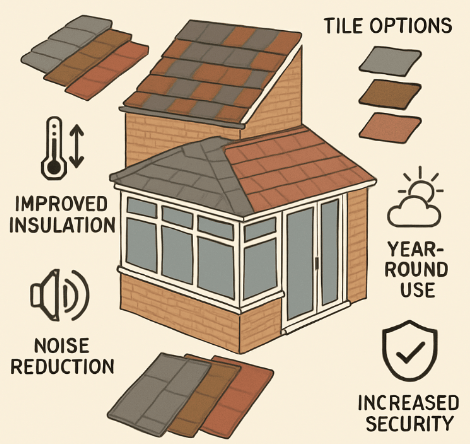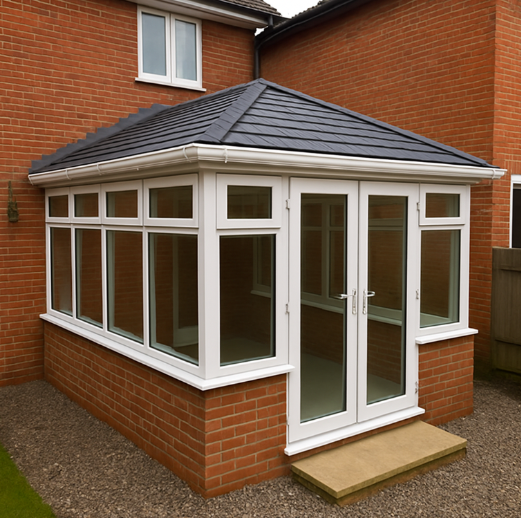
Insulating a conservatory roof can be a game-changer for homeowners. It offers a practical solution to the common problem of extreme temperature fluctuations. This improvement can lead to significant energy savings.
Many conservatories become too hot in the summer and too cold in the winter. Insulation helps maintain a stable temperature, enhancing comfort and usability. This means less reliance on heating and cooling systems.
By reducing energy consumption, Insulation not only cuts costs but also contributes to a more sustainable home. It’s an investment that pays off in multiple ways.
Why Conservatory Temperature Control Matters
Temperature control is crucial for making conservatories useable throughout the year. Without it, conservatories can be uncomfortable spaces. This limits their potential as living areas.
A conservatory without proper insulation often suffers from drastic temperature changes. In summer, they can become unbearably hot, while in winter, they are freezing cold. This inconsistency affects their functionality.
Maintaining a consistent indoor temperature in conservatories benefits homeowners by providing:
- Enhanced comfort in all seasons
- Reduced need for additional heating and cooling
- Improved usability of the space year-round
Proper temperature control transforms a conservatory into a cosy, inviting space.
How Conservatory Roof Insulation Works
Conservatory roof insulation helps regulate temperature by reducing heat transfer. This makes the space more comfortable. It involves installing a high quality multi foil insulation to keep heat from escaping during the colder months of the year. On the flip side it also acts as a barrier, keeping unwanted heat out throughout the summer, helping you maintain that consistent indoor temperature and decreasing your reliance on heating and cooling systems.
Energy Bill Savings: What to Expect
insulating your conservatory roof can lead to significant energy bill savings. Proper insulation reduces the need for extra heating or cooling. This results in lower energy consumption over time. Homeowners often report noticeable reductions in their bills after having insulation installed.
Expected benefits include:
- Reduced energy usage
- Lower heating costs
- decreased cooling expenses
The initial cost of insulation is an investment. Over time, the savings on energy bills can outweigh the installation expenses. Many find these financial benefits compelling.
Additional Benefits of Insulating Your Conservatory Roof
Beyond energy savings, there are several advantages too insulating your conservatory roof. One Key advantage is enhanced comfort throughout the year. Noise reduction is another benefit of proper insulation. This can lead to a more peaceful environment, free from the clatter of rain or traffic.
Additional benefits include:
- Improved temperature consistency
- Increased property value
- Protection from condensation
Insulating your conservatory roof also boosts its longevity. This simple upgrade can greatly improve the space’s usability and aesthetic appeal.
Choosing the Right Insulation and Installation
Selecting the appropriate insulation is crucial for effectiveness. Different materials offer varied benefits and costs. Consider the U-value, which indicates the thermal effectiveness of the insulation. The lower the U-value generally means better insulation performance.
When selecting insulation, consider:
- Budget and cost-efficiency
- Material compatibility with your conservatory
- Potential for noise reduction
Informed decisions on materials and installation methods will results in the best outcomes for your conservatory.
Is Conservatory Roof Insulation Worth It?
Insulating a conservatory roof offers many advantages. Energy savings can offset initial costs over time. Improved temperature control adds value beyond just financial savings. Users Consistently report a more comfortable space. Insulation allows year-round use of the conservatory, making it more functional.
Consider these points when evaluating the worth:
- Potential increase in property value
- Reduction in energy consumption and associated bills
- Enhancements in comfort and usability
Many agree that comfort and savings achieved justify the investment. For most, the decision to insulate pays off both practically and financially.